After months of intensive remote work, the REMAR project, funded by the Emilia-Romagna Region and carried out in collaboration with ISCOS Emilia-Romagna and CESTHA, has finally brought us to Mozambique. This international initiative aims to support the economic and social development of coastal communities in northern Mozambique through an integrated approach that combines marine ecosystem conservation, the promotion of sustainable fisheries, and the active involvement of local communities.
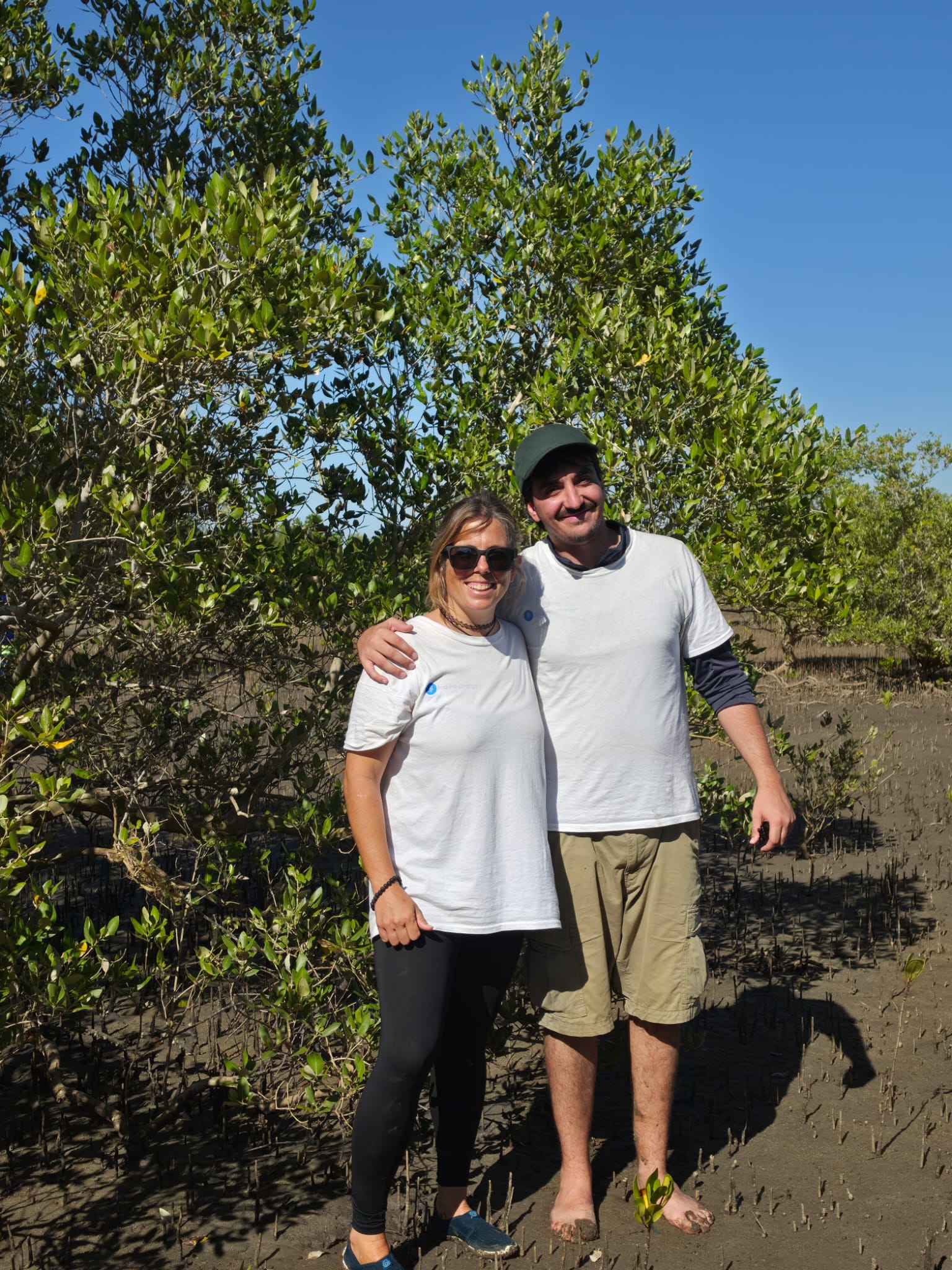
In June 2026, we went on site, working directly in the mangroves, key ecosystems of the project and crucial to the livelihoods of entire communities.
Mangroves: coastal forests between land and sea
Mangroves, which include around 80 species worldwide, thrive in tropical and subtropical regions. Mozambique alone, with more than 300,000 hectares along its coastline, hosts the second-largest mangrove extent in Africa (Da Costa & Macamo, 2023).
These unique coastal forests grow at the interface between land and sea and are made up of highly specialised trees adapted to extreme conditions where few other plants can survive. They are able to tolerate brackish water by filtering excess salt, with some species capable of removing up to 90% of it.Their root systems, partially submerged, guarantee stability against waves and currents while anchoring the trees in soft, unstable sediments. Oxygen scarcity in waterlogged soils represents a further challenge. To overcome this, many species develop pneumatophores: specialised aerial roots that grow upward from the soil and enable gas exchange through small pores (lenticels).
Ecosystem services for local communities
For the communities involved in the project, mangrove forests represent a vital resource. Beyond acting as natural water filters and protecting coastlines from erosion, mangroves also provide timber, an essential material used by local communities to rebuild homes and infrastructure after wars and cyclones that have devastated the country. Mangrove forests are globally considered biodiversity hotspots, acting as nurseries for a wide range of marine species. In Mozambique, they support fisheries and aquaculture, ensuring food security while fostering economic activities such as tourism. One of their most significant yet often invisible functions is their ability to absorb and store large amounts of atmospheric carbon. Through photosynthesis, carbon is captured and stored in plant biomass and sediments, once vegetation decays. This creates long-term “blue carbon” reserves, making mangroves one of the most effective natural tools for mitigating climate change.
Ecosystems at risk
Despite their ecological and socio-economic value, mangrove forests are among the most threatened ecosystems on the planet. Over the past four decades, more than 20% of the world’s mangrove cover has been lost (The World’s Mangroves 2000–2020, FAO), and nearly half of all remaining mangrove forests are currently considered at risk (Red List of Mangrove Ecosystems, IUCN, 2024). Historically, these ecosystems have been heavily degraded by timber extraction, deforestation driven by agricultural expansion and shrimp aquaculture, as well as the indirect impacts of dam construction. And today, these pressures are further exacerbated by the growing effects of climate change. In the areas we visited, mangroves are threatened primarily by the clearing of forests for timber and construction materials. This situation is worsened by wars, conflicts, and extreme weather events. Rising sea levels and the increasing frequency and intensity of storms and cyclones are placing growing stress on coastal ecosystems and compromising the resilience of the communities that depend on them.
REMAR activities
To address these challenges and to face the widespread poverty affecting these areas, REMAR, together with local organisations and communities, is implementing a series of initiatives, including pilot small-scale aquaculture with the direct involvement of women and youths.These actions pursue a dual objective: promoting more sustainable practices while diversifying income sources and strengthening the social and economic role of women, fostering inclusion in productive processes. In recent months, mangrove restoration activities have also been conducted in collaboration with local partners and, in some communities, with the participation of schools and students. During this initial planting phase, Sea the Change carried out a technical and scientific assessment to estimate the CO₂ sequestration potential of mangroves. This work aims to support the development of future blue carbon projects based on carbon offset mechanisms linked to the essential ecosystem services provided by mangrove forests. Overall, REMAR seeks to generate long-term environmental and socio-economic impact by engaging local communities, valuing traditional knowledge, and promoting a participatory approach to natural resource management. As Sea the Change, we are proud to be part of this team and to contribute our expertise to strengthening the resilience of both ecosystems and the communities involved.