A global problem with local dimensions
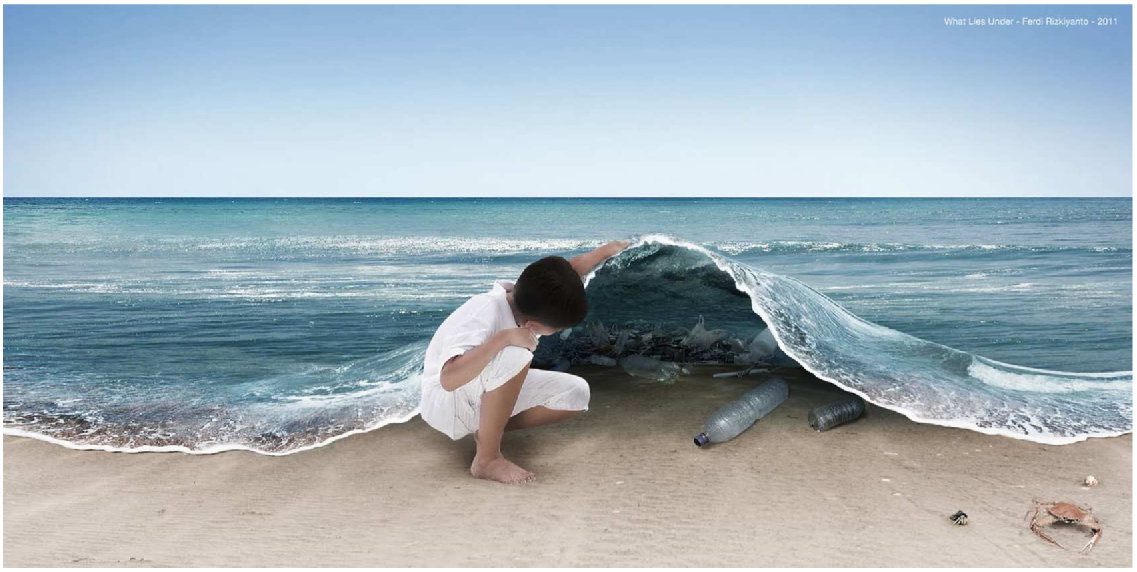
One of the defining characteristics of environmental challenges, especially in the marine environment, is their global nature. Many of the problems we now recognize as urgent and alarming were ignored for too long. Too often, we simply looked the other way, sweeping the dust under the rug or, in this case, hiding the plastic bottle beneath the sea.
But the ocean does not have borders. What enters the water in one place can travel far beyond it. In the end, everything is connected. We share one sea, one vast blue surface that links peoples, nations, and the environmental challenges we sometimes try to push far away from our own shores.
Among these challenges, plastic pollution is one of the clearest reminders that thinking about the ocean means looking beyond national borders and individual interests.
Today, plastic pollution and microplastics are widely discussed. It is estimated that between 19 and 23 million tonnes of plastic waste enter aquatic ecosystems every year, and according to a 2021 report by the International Union for Conservation of Nature (IUCN), plastic accounts for around 80% of all marine litter.
A throwaway society
The future of plastic pollution looks alarming. Between 2012 and 2022, the amount of plastic produced per person in the EU increased by nearly 8 kg, reaching 36.1 kg of plastic packaging waste per person in 2022. If current trends continue, plastic waste in our oceans could triple by 2040.
Around half of all plastic produced worldwide is used for single-use items or packaging that is discarded within a year: a striking example of short-term thinking and a lack of awareness of the global consequences of our choices.
Plastic is a polymer made from petroleum-derived molecules and, while highly durable, it is photodegradable. Sunlight and the constant motion of waves gradually break it into smaller pieces, producing microplastics and nanoplastics that persist in the environment for decades.
Plastic Everywhere
It is estimated that a person ingests around 50,000 plastic particles every year. It’s no surprise, then, that microplastics and nanoplastics have been found in various human tissues: in the blood, in breast milk, in reproductive organs, everywhere.
When a problem directly affects human health, it naturally attracts more attention. But even before it reaches us, microplastics have serious consequences for ecosystems and marine wildlife. Plastic is present at every level of the ocean, from the surface to the deepest sediments, and no one is immune.
Progress in regulation
Thanks to growing awareness of the impacts of plastic pollution on both the environment and human health, European and international regulations are increasingly being implemented. The goal is to act both upstream, by reducing or banning the production of certain plastic products, and downstream, by improving waste management.
Among the most recent initiatives are Regulation (EU) 2025/2365, which targets the prevention of plastic pellet release, a major source of microplastics in the European environment, and Regulation (EU) 2025/40, aimed at reducing packaging waste, promoting reuse, and strengthening recycling systems.
One sea: a common responsibility
Considering plastic as a global problem is essential to tackling it effectively. Around 80% of ocean plastic waste actually comes from land-based sources, which means we need to look beyond what’s visible at sea and address pollution throughout the entire chain, from production to disposal.
European regulations represent an important first step, helping to guide other countries toward better practices. This is particularly critical in low- and middle-income countries, where waste management systems are often less efficient and plastic pollution is very high. In fact, it is estimated that a single person in these countries generates over 50 times more plastic pollution than someone in a high-income country, even though they produce four times less plastic waste overall.
The fact that the 10 rivers contributing most to ocean plastic pollution are all in Asia underscores the global, collective responsibility we share. Every country, community, and individual has a role to play in reducing plastic pollution because we all share one sea.
Our work against plastic pollution
Sea the Change has been working on plastic pollution for years through a variety of projects that address the issue from multiple angles. One of our most recent collaborations is with Eco-River, a project focused on removing floating waste from rivers. Acting at this stage is crucial, as it allows us to intercept plastic before it reaches marine ecosystems: it is estimated that 85% of plastic waste in the oceans originates from rivers.
Alongside this initiative, projects like “Fishing for Litter”, “The Plastic Hunter” and “Venezia - Operazione canali puliti” work “downstream,” focusing on the collection of plastic and microplastics already present in the sea and other water ecosystems.
Yet removing waste is not enough. To truly face the problem, it is essential to act “upstream” too, preventing the behaviors that generate pollution and fostering awareness. These are the core goals of MarEdu, an educational project that engages schools across Italy, providing students with the tools to understand reality, grasp the issue of plastic pollution, and act as responsible citizens.
Addressing plastic pollution is not just a local or national challenge, it is a common responsibility that affects every action, from production and daily choices to industrial practices and policy decisions.
Discover our projects on SEAS! link